In Germany, bone, joint and muscle problems cost EUR 17.2 billion in lost production in one year.
Source: EU-OSHA, 2019 (data 2016)
Evidence
Every number on this site links to the page that prints it. No round-ups.
Each figure was read on its source page on 20 November 2026, and the words beside it are copied from that page. The five workplace figures were read from the charts of the EU-OSHA report on 21 November 2026; each names its chart. The home-exercise figure for clinics was read on its source page the same day. Where a publisher blocks automated readers, the same abstract was read through Europe PMC’s open copy. Money figures here are research findings, not PPW prices.
For employers and investors
In Germany, bone, joint and muscle problems cost EUR 17.2 billion in lost production in one year.
Source: EU-OSHA, 2019 (data 2016)
53% of workers with bone, joint or muscle problems were off work in a year, against 32% of workers with no health problem.
Off for more than eight days in the year: 26% of workers with long-term bone, joint or muscle problems and other health problems, against 7% of workers with no health problems.
Source: EU-OSHA, 2019 (data 2015)
Staff in pain still turn up. They just do less.
“Presenteeism: experiencing pain at work as a result of an MSD is likely to affect performance and productivity.”
Source: EU-OSHA Healthy Workplaces, “Lighten the Load”, 2020–22
saved for every $1
Across 31 studies, companies saved $1.38 for every $1 spent on workplace wellness programmes. The review warns that better-run studies show lower returns.
The review also found lower estimates in small companies (500 employees or fewer). This is research on workplace wellness in general. It is not a PPW result.
1.71 billion people live with a bone, joint or muscle condition.
a year, the top of the estimate
Too little sleep costs the US economy up to $411 billion a year.
The measure is tiredness from too little sleep, in the US. It is not a figure for Mauritius.
Source: RAND Europe, 30 November 2016
working days lost every year
Globally, an estimated 12 billion working days are lost every year to depression and anxiety, at a cost of US$ 1 trillion per year in lost productivity.
This is about depression and anxiety at work, worldwide. It is not a measure of burnout or tiredness.
accidents at work investigated in Mauritius
From July 2024 to June 2025, the Accident Unit in Mauritius investigated 15 fatal accidents and 302 notifiable non-fatal accidents at work.
These are all accidents at work, of every kind.
Source: Ministry of Labour and Industrial Relations, Mauritius, Annual Report 2024–2025
619 million people had low back pain in 2020. The WHO expects 843 million cases by 2050.
median ROI across 112 studies
A 2026 review of 112 studies found 89% reported positive cost-benefit ratios. The median ROI was 1:3.1. For ergonomic interventions the median was 5.2:1.
In the same review, ergonomic programmes cut musculoskeletal injuries by 29.4% on average.
The authors say the results “should be interpreted with caution given the substantial methodological heterogeneity, geographic concentration in high-income countries, and the predominance of employer-perspective analyses.” The 29.4% is for ergonomic programmes only. It is not a PPW result.
Source: Llamas and Martín Estévez, BMC Public Health, 4 August 2026
One survey for all five, so the numbers compare: the European Working Conditions Survey, 2015.
Office
36% of office clerks in the EU had pain in the shoulders, neck or arms in the past 12 months. The same workers: back 37%; hips, legs or feet 20%. All workers: back 43%, shoulders, neck or arms 41%, hips, legs or feet 29%.
A survey of 35,536 workers in the 28 EU countries in 2015. It counts any pain, mild or severe. Not a Mauritius figure, and not a PPW result.
Source: EU-OSHA, 2019 (data 2015), figure 23, clerical support workers
Construction
52% of construction workers in the EU had backache in the past 12 months. The same workers: shoulders, neck or arms 54%; hips, legs or feet 41%. All workers: back 43%, shoulders, neck or arms 41%, hips, legs or feet 29%.
A survey of 35,536 workers in the 28 EU countries in 2015. It counts any pain, mild or severe. Not a Mauritius figure, and not a PPW result.
Source: EU-OSHA, 2019 (data 2015), figures 20 to 22, construction
Drivers
46% of workers in transport and storage in the EU had backache in the past 12 months. The same workers: shoulders, neck or arms 37%; hips, legs or feet 26%. All workers: back 43%, shoulders, neck or arms 41%, hips, legs or feet 29%.
A survey of 35,536 workers in the 28 EU countries in 2015. It counts any pain, mild or severe. Not a Mauritius figure, and not a PPW result.
Source: EU-OSHA, 2019 (data 2015), figures 20 to 22, transportation and storage
Medical
47% of workers in health and social work in the EU had backache in the past 12 months. The same workers: shoulders, neck or arms 46%; hips, legs or feet 31%. All workers: back 43%, shoulders, neck or arms 41%, hips, legs or feet 29%.
A survey of 35,536 workers in the 28 EU countries in 2015. It counts any pain, mild or severe. Not a Mauritius figure, and not a PPW result.
Source: EU-OSHA, 2019 (data 2015), figures 20 to 22, human health and social work activities
Hospitality
35% of workers in accommodation and food service in the EU had pain in the hips, legs or feet in the past 12 months. The same workers: back 43%; shoulders, neck or arms 41%. All workers: back 43%, shoulders, neck or arms 41%, hips, legs or feet 29%.
A survey of 35,536 workers in the 28 EU countries in 2015. It counts any pain, mild or severe. Not a Mauritius figure, and not a PPW result.
Source: EU-OSHA, 2019 (data 2015), figures 20 to 22, accommodation and food service activities
For hotels, spas and clinics
Not a scare: the sources themselves say serious harm is rare.
62% of spa guests who had a bad visit blamed the people. The top complaint: pressure and touch from staff not well trained in massage.
Victor’s standard: Pressure: read the tissue. Feel the muscle tighten against you, and ease off.
A 2010 survey of more than 1,350 answers by a mystery-shopping firm. Not a peer-reviewed study.
In one US state, the regulator opened 1,366 massage complaint cases in a year.
Victor’s standard: One written standard for every therapist: the same rules, the same order, every guest.
Texas, financial year 2025. 19.76% of complaints led to disciplinary action. Most cases are about licensing and conduct.
In one outbreak, 22 of 31 people with a skin infection had visited the same massage centre. Clean tables and clean hands are not a detail.
Victor’s standard: A fresh roll or a clean towel for every guest. Wash your hands. Wash the bottle.
The Netherlands, 2023–2024. The source says most people had mild skin infections.
Source: van Schelven and others, Emerging Infectious Diseases (CDC), April 2026
In one hotel, 16 of 59 guests studied had a skin rash. Guests who used the spa: 44%. Guests who did not: 0%.
Victor’s standard: Victor’s standard starts with clean: the table, the hands, the bottle.
An event in November 2004, linked to the hotel’s sauna and steam room, not to massage.
Source: Santé publique France, 2006
of 138 adverse events in 11 years
A review of reports from 2003 to 2013 found 40 reports of 138 adverse events. The authors say the incidence is low, and that massage is not free of risk. That is why order of work and referral are part of the standard.
“Clearly, massage therapies are not totally devoid of risks. But the incidence of such events is low.”
Victor’s standard: Order of work: head before neck; legs before lower back. Know when to refer, and who should not be treated.
Source: Yin and others, Evidence-Based Complementary and Alternative Medicine, 2014
In a survey of 1,103 Ontario massage therapists, 54.6% were working in pain and 30.5% were thinking about, or had made, a change of profession. A therapist who burns out is a team member the hotel loses.
Victor’s standard: Frames: about fifty body positions, so the weight goes through the skeleton, not the therapist’s thumbs.
A voluntary survey. The authors warn about self-selection.
Source: Barraclough and others, International Journal of Therapeutic Massage & Bodywork, 2022
Estimates of how many patients do not keep up their home exercise in rehabilitation run as high as 50%.
The top of the estimates that this 2018 viewpoint paper brings together from earlier studies. It differs by patient and condition. Not a PPW result.
Research on apps and trackers in general
Research on the whole field. It is not a claim about the PPW Lifestyle App or Atlas Bod.
extra steps a day, about
Research on 39 reviews of activity trackers found about 1,800 extra steps a day. Effects on blood pressure and pain were small.
Source: Ferguson and others, The Lancet Digital Health, August 2022
trials of mental-health apps
In 176 trials of mental-health apps, the effect on low mood and worry was small but real.
trials of standalone apps
A 2025 review of 72 trials says some apps help with low mood, worry and sleep, and tells readers to be careful with the results.
Source: The Lancet Digital Health, 2025
How it works
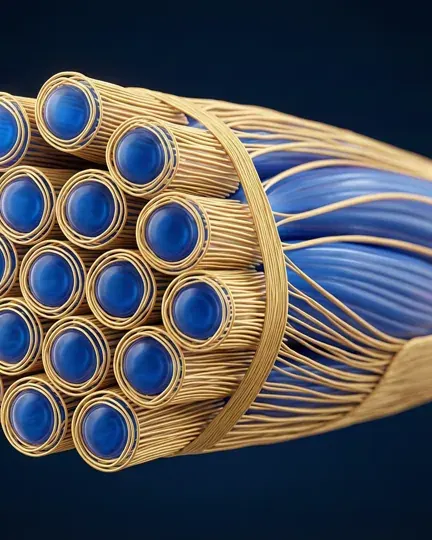
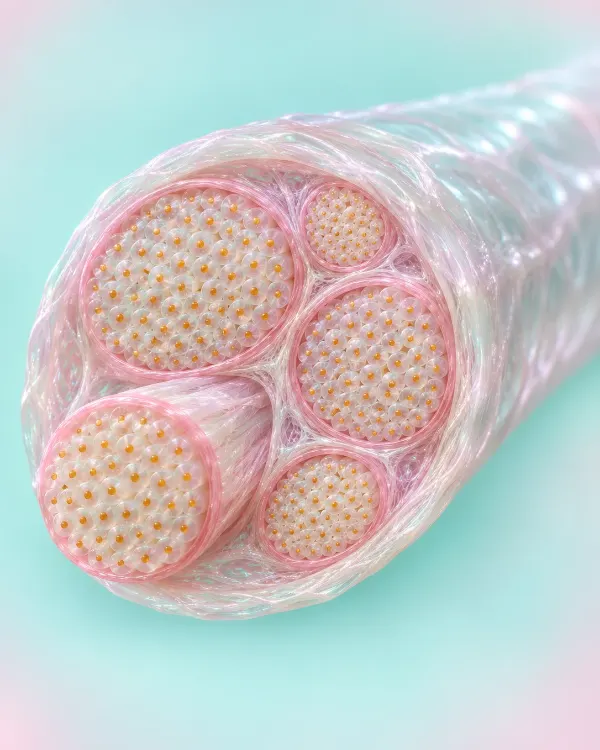
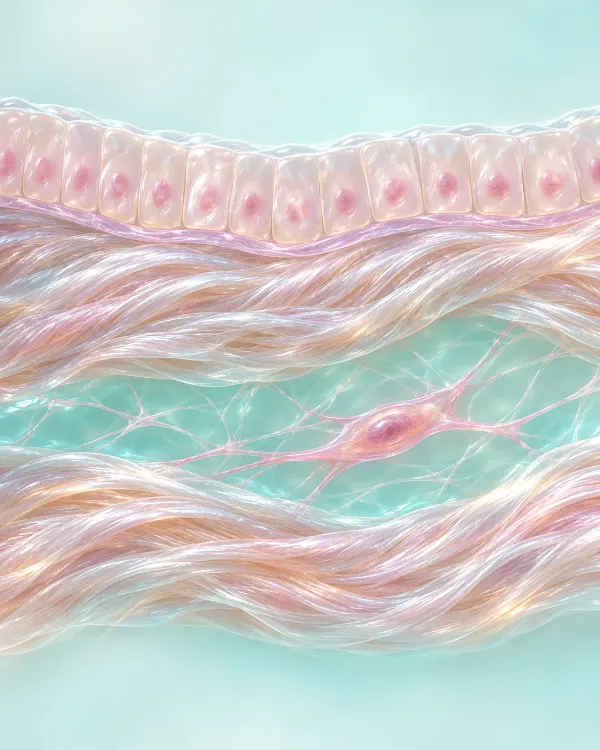
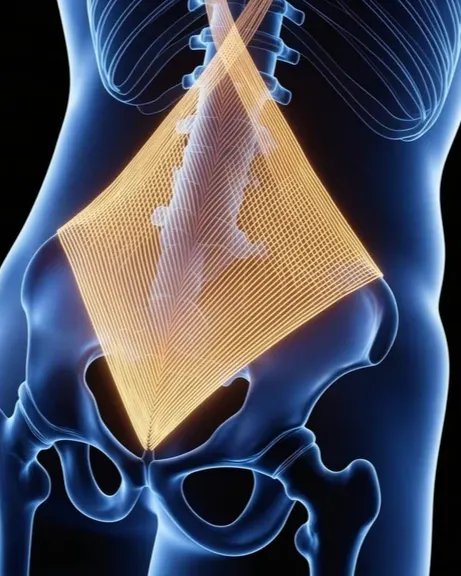
Fascia is the connective tissue that wraps every muscle, bone, organ, nerve and blood vessel. It is one connected web, and one of the body’s richest sensory tissues.
Fascia and tendon renew their collagen in response to movement and loading, and that renewal slows markedly without it.
Massage after hard exercise reduces muscle soreness in the days after.
Science base: KB-0014 (fascia as a sensory tissue), KB-0015 (connective tissue follows load), KB-0010 (massage after strenuous exercise and muscle soreness).
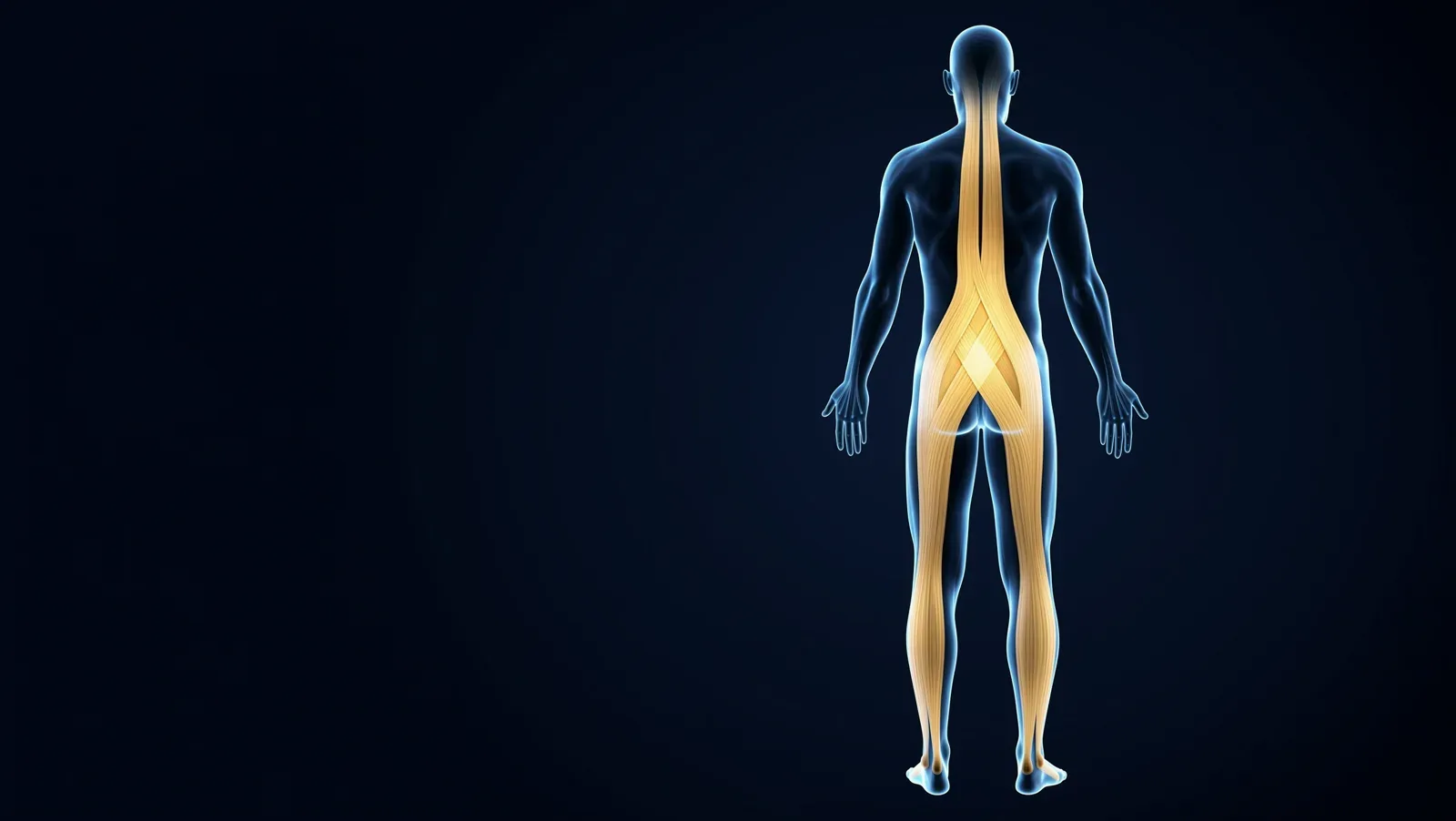
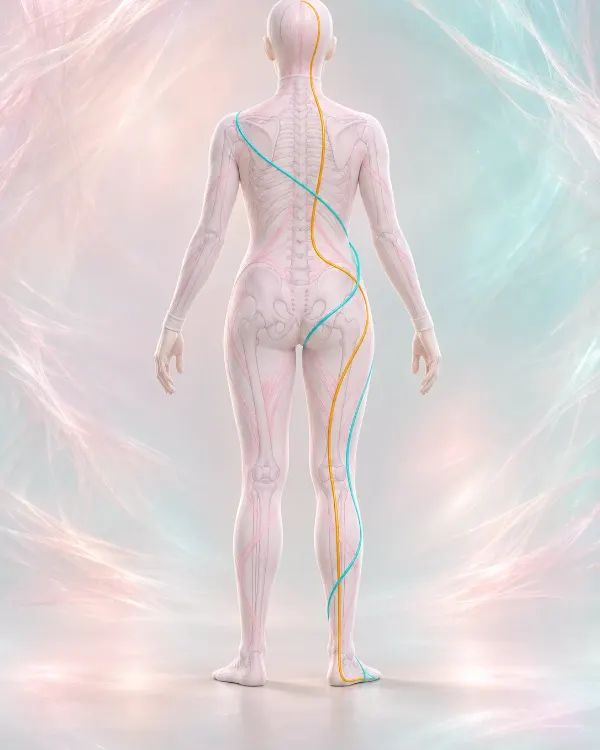
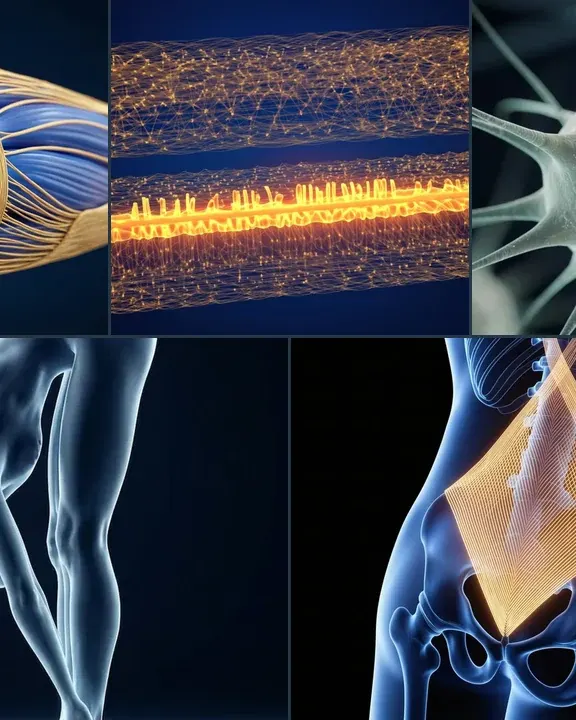
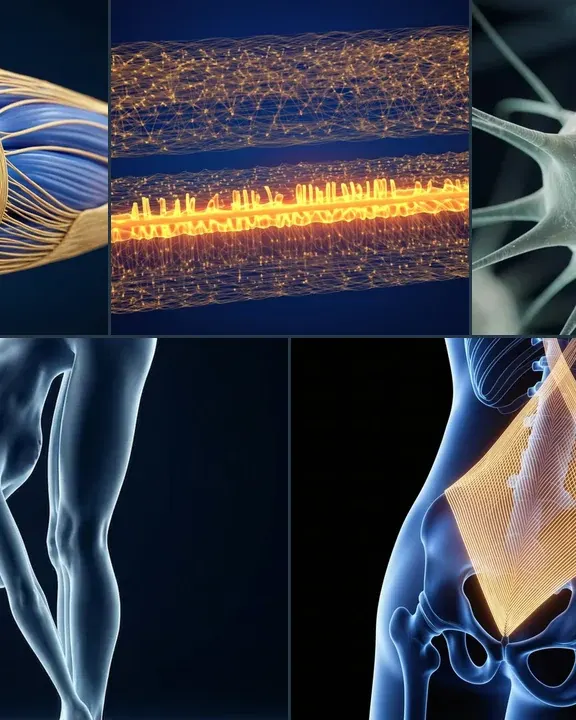
Behind: a figure with the fascia lines of the back drawn in light. Illustration, not a scan.
Talk to Victor
Prefer to pick a time now? Book a one-hour online meeting.
In Mauritius, Victor can also come to you: meet at your offices on a Wednesday.